Monday, January 01, 2007

Reflection on the New Year Eve

I used to celebrate the new year countdown at the Tanjong Bungah beach with my girlfriend (now my wife). We stopped practising it after our first baby arrived.

This year, I stared in front of the monitor by writing my year 2006 report card and year 2007 resolution.

Year 2006 was a significant year for me as I ventured into a new territory. I have switched from a high-tech world to the legal world. To put it in the management jargon, it is called "mid-career switch".

It is a 3-page long 2006 report card. Same length for my 2007 resolution. Both reports cover topics ranging from family, home improvement, NGO participation, political participation, financial, knowledge building, health etc. By doing this, I can monitor my progress on various areas. I can only monitor things that can be quantified such as LDL Cholesterol level. BTW, my daughter have a good head start by obtaining the first position in her class.

For year 2007, it will be an interesting year. My wife will finish her Bachelor of Social Science (USM). Being a part time student, it is a long march for her. Along the way, she gave birth to our three lovely kids. I also pray that the renovation of the Penang Court building to be finished on time so that I can have my long call ceremony there.

Wednesday, December 13, 2006

General election in 2007?

The headline of Nanyang Siang Pau "明年不大选" (General Election will not be next year).
Similar headline for all major Chinese newspapers.

New Straits Times and Utusan did not carry this piece.

My friend Ng Wei Aik has jumped into the early election bandwagon by throwing down the gauntlet to the Penang Chief Minister, Dr Koh Tsu Koon. He has to maintain his stamina for another 12 months.

The source from Bloomberg.

Here is the excerpt:
"Abdullah Says Malaysian Polls Can Wait, Targets Graft (Update3)
By Stephanie Phang and Angus Whitley
Dec. 12 (Bloomberg) -- Malaysian Prime Minister Abdullah Ahmad Badawi said he probably won't hold an election before 2008, giving himself more time to battle corruption and muster support.
``Next year is too early,'' Abdullah, 67, said in an interview at his home in Putrajaya, south of Kuala Lumpur. ``I have to prove that a lot of things can be done and have been done and we have succeeded.'' "


Wednesday, November 29, 2006

Cautioned statement

The Court of Appeal is sitting in Penang for the past three days. There is an interesting murder case coming up for appeal. Lim Chooi Huat v Public Prosecutor. The High Court sentenced the accused to death.

The crux of the argument of the appellant counsel is the admissibility of the cautioned statement (also known as s113 statement). The appellant is a Form 1 drop-out. The appellant counsel pointed up that the Recording Officer (RO) failed to administer the caution to the accused. The counsel argued that the RO read the caution but not explain to the accused (baca tapi tidak terangkan).

The defence quoted the cases of Hizbullah, Tan Ewe Huat etc.

The panel of three judges reached an unanimous decision today that the trial judge has wrongly admitted the caution statement and there is insufficient evidence to call the accused to enter defence.

The accused is discharged and acquitted. The defence counsel is Sithambaran.

For further details and the photos, please read the major newspaper.

Anyway, the issue of admissiblity of cautioned statement will be part of the legal history. The amended Criminal Procedure Code (effective 1-1-2007) will remove the clause.

Saturday, November 25, 2006

Not an exact science

Quotable quote from the judgment of Singapore High Court in the divorce case of NK v NL

"Division of matrimonial assets is not and is never an exact science. The court can only attempt to make a just and equitable division, applying a broad-brush approach. "

The Court further awarded to the petitioner/wife by way of monthly maintenance a sum which was adequate for the standard of living she had been accustomed to in recent years, during the subsistence of the marriage.

Wednesday, November 08, 2006

Affirmative Action around the World

My learned friend, Sdr Yeap Cheng Liang, has written a letter to Malaysiakini. He quoted the book "Affirmative Action around the World" by Thomas Sowell. His letter can be accessed here.

Yeap also send me the book. I managed to finish the chapters on India, Sri Lanka and Malaysia. I am still reading the chapter on Nigeria. I will like to thank him for the kind gesture.

The issue on equity and marginalization would be the highlight of the coming General Election.

Saturday, October 21, 2006

Kallang body parts muder case (Appeal dismissed)

On 22-5-2006, I have blogged the Singapore case of PP v Leong Siew Chor (also known as Kallang body parts murder case) . Leong Siew Chor was convicted for the murder of his girlfriend and sentenced to death by the High Court.

He filed an appeal against the conviction in the Court of Appeal.

The basis for the appeal was that the trial judge erred in admitting the cautioned statement.

The accused has made the cautioned statement on the ninth day after he was arrested. The accused was only granted the right to counsel on 20th day.

The argument by the defence counsel is that once an application was made to the subordinate court (on the seventh day) , then any further denial of a right to counsel would be unreasonable.

On 6-10-2006, the Court of Appeal dismissed the appeal.
The ground of the decision:
"It is not enough merely to say that this accused was denied access to counsel on the grounds given in this case. Counsel was inviting this court to make an important ruling on a constitutional point without sufficient material in law and evidence to sustain any cogent question of law. It may be that the police ought not deny a right to counsel in the narrow form of receiving advice on the right to remain silent, to the broadest form possible, but this is not the case to advance any such argument. It is too thinly supported on the facts; this is not the right case for the points of law alluded to."

It is a settled law in both Malaysia and Singapore that the right to counsel is not an immediate one but one that would be granted within a reasonable time after the accused is arrested.

Jasbir Singh v PP [1994] 2 SLR 18 and Lee Mau Seng v Minister for Home Affairs, Singapore [1969–1971] SLR 508 are the cases cited by the Public Prosecutor.

What amount to reasonable time is a question of fact. Case in point is Mohd Ezam (Federal Court), an ISA case.

Sunday, October 15, 2006

Breakdown of lawyers by etnic groups

A few CLP (Certificate in Legal Practice) candidates wrote to The Star and NST complaining about the low passing rate of the exam and ask for more transparency.

In a separate note, I came across the statistics on the breakdown of lawyers by etnic groups. The order of the data is Bumiputra, Chinese, Indian.

Year 2000: 3118 , 3861, 2588

Year 2005: 4465, 4354, 2834

I will leave it to you to make your own interpretation and judgement.

I am reading the book "Affirmative Action Around the World" by Thomas Sowell. I will blog it later.

Saturday, September 30, 2006

Double agent or rather penetration agent


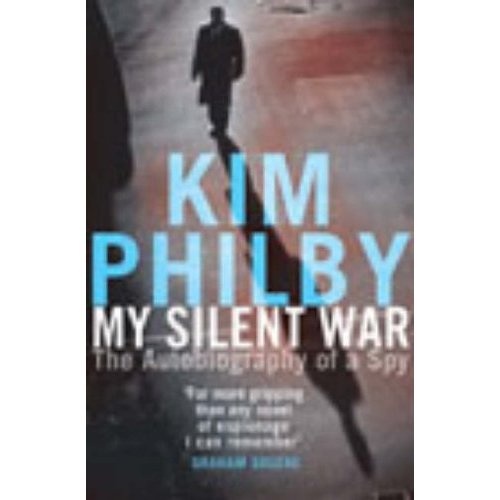
I am reading the book called "My Silent War" by Kim Philby. It was the autobiography by a spy.
Philby told his life story on espionage which spanned across 1940s to 1960s.

Philby was a British citizen. He was brought up and educated under the British education system. In Cambridge, he was exposed to communism. He became a Communist then.

He was under the payroll of MI6, The British Intelligence Service. He climbed up the career ladder and became a high-ranking officer in MI6. Behind the scene, he was a Soviet agent.

Philby confessed that he was not a double agent. He was actually a penetration agent in the MI6 working for the interest of the communism.

Penetration agent is nothing new.

Lai Teck (the one time chairman of Communist Party of Malaya) was actually a spy planted by the British in the CPM. Through deception, Lai Teck gained the trust of the committee members of CPM and ascended to become the chairman of the party. He continually sold out party members, so that the leaders were arrested by the British colonial government one after another before the Second World War.


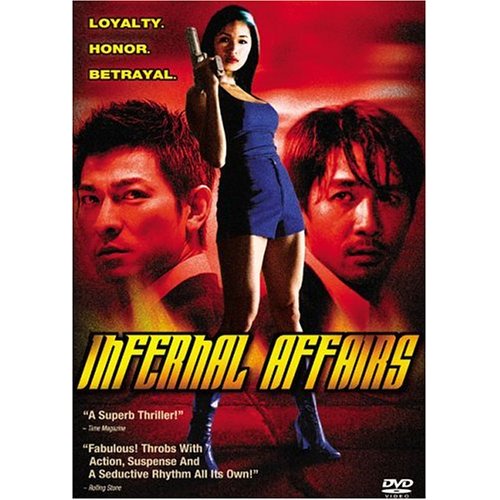
Another good movie on the penetration agent was the "Wu Jian Dao" (Infernal Affairs). The convention practice is the police force sending the under-cover agents into the secret societies. "Wu Jian Dao" was a story on how the secret societies sending the penetration agents into the Hong Kong police force.

Friday, September 15, 2006

Rote learning, Socrates method or Problem based learning?

Dear Sara,

Your question: "Would you mind if I asked whether it is really NOT necessary to refer to textbooks for the CLP as claimed by the lecturers at bricks? Making it sufficient to pass the exams solely on memorising, regurgitating, and somehow writing it all down in 45mins?"

My short answer:
There are three ways to tackle CLP - rote learning, Socrates method or Problem Base Learning. You may apply either way depending on your situation. If you are a graduate from foreign university, you may face a bit of problem as you have to familiarize yourself with the Malaysian law. For me, it was pretty straightforward as I have invested 4 years of my time in Malaysian law prior to CLP exam.

I must confess that although I was part of the statistics in the success story published by Bricks, I did not follow the advice of Bricks. In my opinion, the Bricks method is sufficient for you to face the exam of yesterday but not today. In fact, I only attended the Final Intensive Review for 10 weeks (March to June). I did not attend the lectures or tutorials.

One of the main challenges of CLP exam is the questions are pretty current. You have to read up on the recent judicial pronouncements.

Takes for instance, you will not able to answer the question on double presumption on drug trafficking if you have not read Muhamand Hassan and Tan Tek Eek. Bricks would not prepare you for that. In the Evidence paper for July 2005, double presumption constitutes one question. I am very sure that Bricks has included double presumption in its lecture notes now. This was not done back in 2005.

Another example is the Bankruptcy question in July 2005. The candidates are expected to know the case of Bungsar Hill (Federal Court, year 2005). Again, this was not cover in the lecture notes. I attempted that question. I was rewarded with an A for the Professional Practice.
Anyway, Bricks is right on the General Paper. The candidates have to sit down and attempt at least 10 statements of claim. In General Paper, you have to make sure that you are able to finish the papers within the stipulated time. Practice made perfect.

I was using the reverse engineering approach. Here is the outline of my study method for CLP.
It was kind of problem-based learning method.

1. First round: Speed reading. One subject per week.
2. Check out the past year questions. Group the past year questions into multiple topics.
3. Base on the past year questions, read up the cases and attempt the questions at the same time.
4. Attend the Final Intensive Review by Bricks.

You may find some the following books useful:
1. Evidence by Augustine Paul.
2. The CLP books series by MLJ.
3. Criminal Procedure by Mimi Kamariah. You may read this together with Bricks notes.
4. Criminal Prosecution for High Court by MLJ.

Tuesday, September 12, 2006

Time and tide wait for no man

Well, I am moving on.

My schedule until end of the month.

Tuesday: Go to see D for advice on Form 1 and 2.

Wednesday: Last day in my work place.

Thursday: Work on Form 1 and 2. Go to see Commission of Oath to certify my documents. Getting things ready for submitting petiton to KL High Court

Friday and Saturday: Attend Criminal Law Workshop at University of Malaya.

Sunday: DAP Publicity campaign at Jelutong Market

Monday (September 18th):Report to work. Start the 9-month chambering.

Monday (September 25th): Submit Form 1 and 2 at KL High Court. I will find time to attend the hearing on Chin Peng's case.